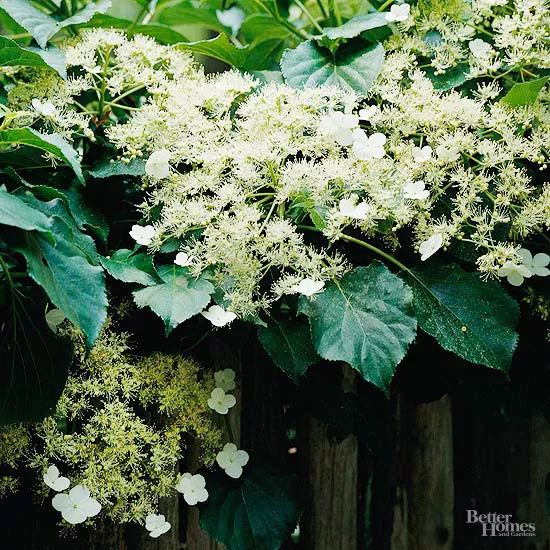
Climbing hydrangeas combine the attractive growth habit of a vine with the beauty of hydrangea flowers. A full-grown climbing hydrangea in bloom covering a wall, fence, or arbor is a spectacular sight. This big vine produces large clusters of white flowers held against rich, dark green foliage. Climbing hydrangeas latch onto supporting structures by aerial roots. They grow very slowly and won't flower for the first few years.
Like all hydrangeas, climbing hydrangeas are toxic to people and pets.
Climbing Hydrangea Overview
| Genus Name | Hydrangea anomala subsp. petiolaris |
| Common Name | Climbing Hydrangea |
| Plant Type | Vine |
| Light | Part Sun, Sun |
| Height | 30 to 50 feet |
| Width | 5 to 6 feet |
| Flower Color | White |
| Season Features | Summer Bloom |
| Special Features | Low Maintenance |
| Zones | 4, 5, 6, 7 |
| Propagation | Stem Cuttings |
Where to Plant
Find a location with partial shade and rich, slightly acidic soil containing a lot of organic matter.
Climbing hydrangea is a large, heavy vine that needs both space and a sturdy structure to hold onto. This can be a stone or brick masonry wall, fence, arbor, gazebo, or another free-standing outdoor structure but it must be strong enough to support the vine. Consider the mature size before selecting a location. While climbing hydrangea might be slow to grow during the first years, once it has taken off and established itself, it will be difficult to move if the location turns out to be unsuitable.
How and When to Plant
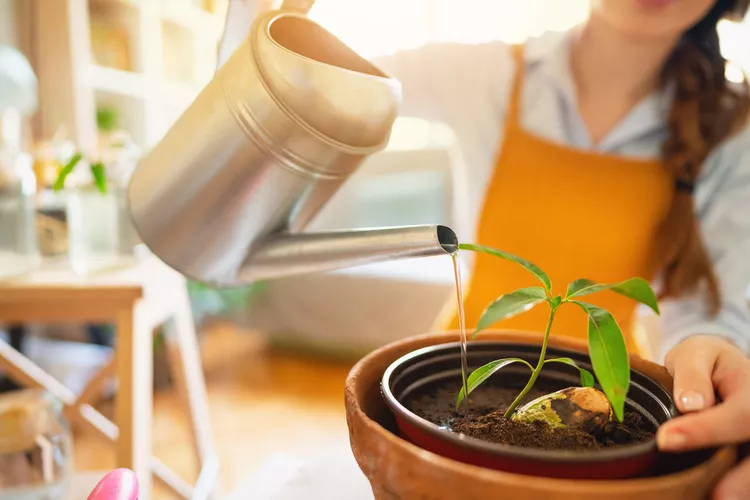
The best time to plant a climbing hydrangea is in the late spring after all danger of frost has passed. Dig a hole at least twice the size of the root ball and just as deep. Place the hydrangea in the hole and backfill with the original soil so that the top of the root ball is flush with the soil or about ½ inch higher. Tamp down the soil and water it well. Keep the soil moist by watering it regularly during the first growing season to encourage a strong root system.
Space plants at least 10 feet apart to ensure good air circulation.
Although climbing hydrangea won’t latch on to the support in the first growing season, have the support in place before you plant to avoid disturbing the roots. Tying the plant to the support with garden twine is optional. Usually, the plant finds support on its own in its second year.
Climbing Hydrangea Care Tips
The vine is easy to grow and requires only a little maintenance.
Light
The light requirements for climbing hydrangea depend on where you live. In northern locations, the plant prospers in full sun whereas in hotter climates in the south, part shade, especially during the hot afternoon hours, is better. Generally, climbing hydrangea tolerates shade well, however, heavy shade reduces the blooming.
Soil and Water
The soil needs to be moist with good drainage and rich in organic matter with a pH between 6.0 and 6.5.
Young plants need frequent watering until they are established. Mature climbing hydrangeas don’t need quite as much water, but consistent moisture is still key for growing a lush vine. In the absence of rain, give the plant at least 1 inch of water weekly, more in hot summer weather.
Temperature and Humidity
A temperate climate is ideal for climbing hydrangeas; they don’t tolerate any extreme cold, extreme heat, or high humidity.
Fertilizer
Skip the fertilizer until the shrub is established, which takes a few years and fertilizing it won’t speed up that process. After that, apply a balanced slow-release fertilizer or a high-phosphorus fertilizer once every spring before the plant breaks dormancy. Alternatively, spread a 2-inch layer of compost around the base of the plants in the spring.
Pruning
For the first few years, climbing hydrangea won’t require any pruning, as it grows so slowly. Later, only prune dead or damaged branches soon after the bloom in late spring or early summer. If the vine grows vigorously and becomes too dense or overwhelming, you can prune it to improve air circulation. Climbing hydrangea blooms on old wood so any late-summer pruning risks removing next year’s flower buds.
Potting and Repotting
Due it its size and weight, climbing hydrangea is not suitable for container-growing.
Pests and Problems
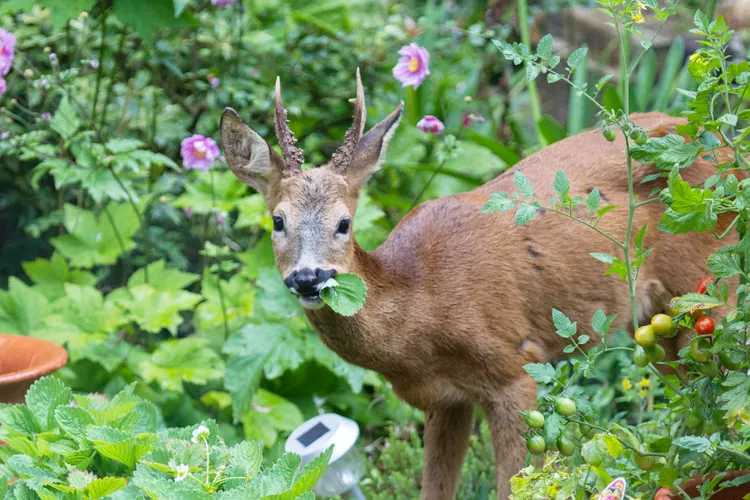
The vine is not affected by serious pests or diseases. Its dense foliage makes climbing hydrangea susceptible to mildew and leaf spot. Possible pests include spider mites, scale, and aphids. Deer browsing can be a problem, especially since the flowers are attractive to deer.
How to Propagate
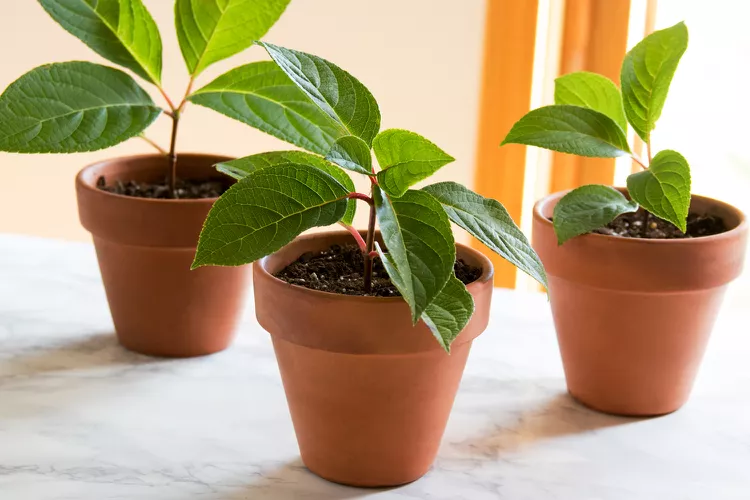
Climbing hydrangea can be propagated from cuttings. In the early summer take a 4-inch softwood cutting. Snip it off just below a leaf node and make sure there is at least one set of leaves above the leaf node. Remove all the leaves except the top two leaves. Dip the cut end in rooting hormone and insert the cutting 1 to 2 inches deep into pots filled with damp potting mix. Cover the container with a plastic dome (an inverted bottle with the top part removed works well) because the cutting needs relative high humidity to root. Keep the cutting moist at all times. The cutting has rooted when you gently tug on it and it doesn’t wiggle. Also check out these detailed directions for propagating hydrangeas.
Types of Climbing Hydrangea
'Miranda'
This cultivar has variegated heart-shaped dark green leaves with yellow to creamy white margins and an exfoliating reddish-brown bark. To maintain the variegation, it is best to give it a bit more shade.
'Silver Lining'
The dark green leaves of this cultivar have a silver or white variegation. Its attractive foliage almost outshines the clusters of white, domed flowers in the summer.
'Firefly'
Although it is sometimes listed as the trade name of ‘Miranda’, this is a different variegated variety. ‘Firefly’ has deeply serrated dark green leaves with broad golden-yellow margins that fade to yellow-green as the season progresses. The vine has an upright climbing habit.
Climbing Hydrangea Companion Plants
Bleeding Heart
It's easy to see why bleeding heart with its pendulous, heart-shaped pink or white blooms is such a popular plant. Bleeding heart plants are quick to come up in the spring and swiftly grow to full size. It is best planted where it receives partial shade or sun in the morning and shade in the afternoon. Zone 3-9
Foamflower
Related to coral bells, foamflower, also known as tiarella, sports showy white flowers in late spring and early summer. While the foliage of this woodland native may not be quite as showy as coral bells, foamflower compensates with a bounty of blossoms. In the spring, the plants are loaded with spires of foamy white flowers. It is a perfect groundcover to meander between clumps of established hostas or ferns. Zone 3-9
Meadow Rue
The delicate, airy flower clusters of meadow rue are just as attractive as its petite, columbine-like leaves. Both add eye-catching texture to the garden from spring through fall. Its foliage is compact and tidy while its flower stems tend to be pleasingly wayward and frothy. Zone 3-9