5 Must-Know Tips for Designing a Natural Garden

23.9K
1.4K
458
2025-10-28
5 Must-Know Tips for Designing a Natural Garden

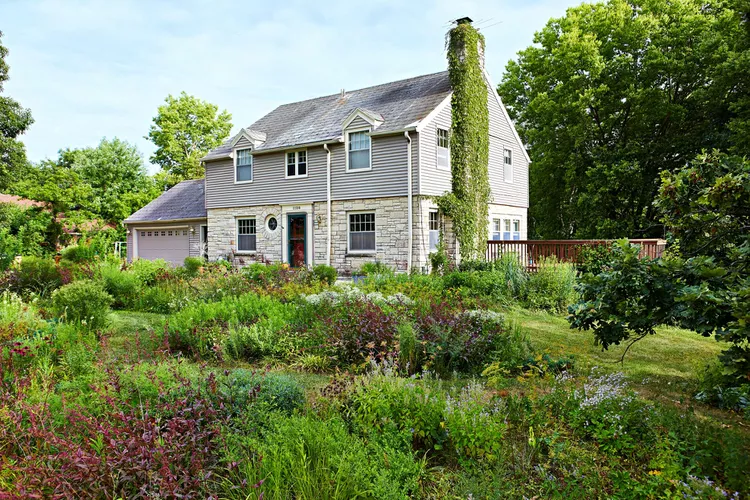
Maybe you're thinking about replacing your lawn with something more sustainable. Perhaps you have a shady spot where nothing grows. Or you may be looking to create more habitat for wildlife such as birds and butterflies. A natural garden or landscape is an increasingly popular solution for all of these situations, but perhaps you're worried it will look too weedy or messy. Here are five design tips that will help you create a space that appeals to both people and wildlife.

1. Choose compatible native plants.

You’ve probably heard the adage of “right plant, right place,” and never has this been more true than in natural garden design. What this saying means is that if a plant grows in dry clay in full sun in the wild, that’s where you should place it in your landscape. Sometimes we force plants into conditions they don’t like because we find the plant beautiful, but that is antithetical to natural design. With a little research, you can find all kinds of cool native plants you never knew about that would work great for your site instead.

Further, if you have a smaller front yard or garden bed, it’s wise to select species that are behaved clumpers. This means they don’t self sow or shoot out runners aggressively. In addition to creating maintenance headaches, unruly plants in a too-small space are the ones that truly look weedy. 

Further, if you have a smaller front yard or garden bed, it’s wise to select species that are behaved clumpers. This means they don’t self sow or shoot out runners aggressively. In addition to creating maintenance headaches, unruly, spreading plants in too small a space are the ones that truly look weedy. 

2. Repetition is your friend.

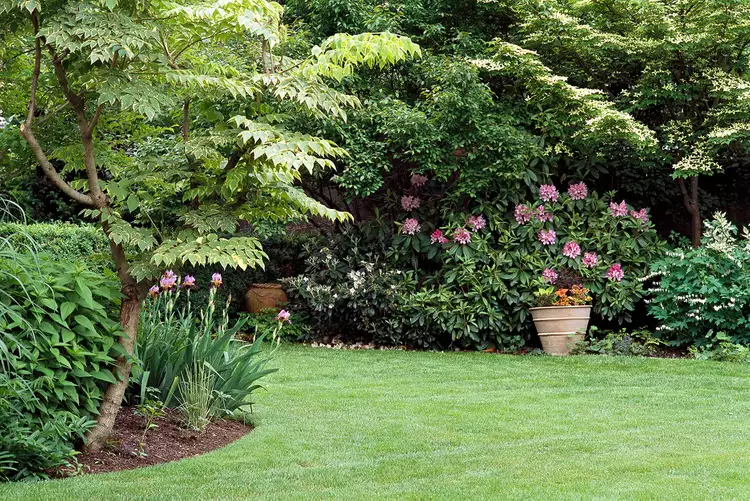
Our eyes have evolved to seek out patterns in nature to make sense of the seeming chaos. In fact, our eyes move in a pattern of fractal geometry (which also defines how plants and animals grow, and helps us map coastlines and forests). Walk through a meadow and try it. You’ll soon notice how you’re viewing repeated flower masses across the space. To get that natural look in your landscape, group each type of plant in 3-5 of a kind, then repeat that 3, 5, or 7 times. The repetition helps our eyes "read" the landscape and see purpose.

In a natural meadow or woodland, you’ll also notice how plants are almost growing on top of one another, in close quarters and in layers. So plant everything 12 inches apart to cover open ground. This will help shade out weeds and create habitat for birds, frogs, and other wildlife.

3. Don't overdo flowers.

Aim to have no more than three types of flowering perennials in bloom at one time. Why only three? It helps not overwhelm the space with color. But isn't that what we want–tons of blooms and color? Yes, except that too much will appear messy and unorganized.

Don't worry, you’ll still have plenty of flowers throughout the growing season with this rule of three. At the same time, you’ll be meeting traditional garden design and aesthetic expectations in the middle, which is what you want to do if you're hoping to encourage neighbors to follow you down the wilder path (or at least appreciate its beauty). You can always add more later as you gain experience and as our wilder spaces gain more acceptance.

4. Keep things shorter.

This strategy goes for foundation beds as well as entire front yards. Generally, selecting species that are under 2-3 feet tall will help provide continuity to the space as well as help folks see over, into, and through the landscape. Seeing this way is comforting; after all, we evolved in grasslands looking into the distance for predators, where anything blocking the view would be disconcerting. The same principle applies to busy street corners where cars need to see oncoming traffic and kids on bikes. Keep it low and go with the flow. 

5. Plant for bloom succession, fall color, winter seed heads.

This last design strategy almost takes care of itself because it’s what plants do: they change leaf color in autumn (even herbaceous perennials), and many have attractive seed heads and umbels in winter. And if you have 15-20 species in your landscape, you’ll almost by default have bloom succession.

Still, the hardest period of the year to have blooms are the in-between shoulder seasons–late spring into early summer, and late summer into early fall. So especially pay attention to species that fit your site and bloom during these times, even if it’s just one or two. And don’t forget that winter is a season full of design possibility, and brown is a color, too, with many rich hues.

A natural garden may be born from wilder roots but it's still a garden that requires planning and thought. It can be beautiful to all species who come through the space, human and bird and spider and bee, without losing any of its power or resonance to support for the environment.
Related Article

How to Propagate Pothos Successfully in Soil or Water
35K
3.5K
420

How to Propagate Pothos Successfully in Soil or Water

Learn how to propagate pothos plants successfully with these simple step-by-step instructions.
24 Easy-Care Houseplants With Low Watering Needs
23.2K
926
296

24 Easy-Care Houseplants With Low Watering Needs

The low-maintenance, easy-care houseplants in this collection add lushness and color to any home without needing much more than occasional watering.
How to Plant and Grow Philodendron
8.7K
523
78

How to Plant and Grow Philodendron

Find growing information on philodendron, the perfect houseplant for new plant owners.
How to Get Rid of Spider Mites on Indoor Plants
26.3K
2.6K
788

How to Get Rid of Spider Mites on Indoor Plants

Spider mites are a common houseplant pest. Learn the early signs of spiders mites on your plants and how to get rid of them.
16 Small Backyard Garden Ideas for Maximizing Your Landscape
46.8K
4.2K
716

16 Small Backyard Garden Ideas for Maximizing Your Landscape

Even the tiniest landscapes can be magical outdoor spaces with these small backyard garden ideas that maximize your yard.
Here's How to Dry and Preserve Flowers to Enjoy Their Beauty Year-Round
2.8K
275
112

Here's How to Dry and Preserve Flowers to Enjoy Their Beauty Year-Round

Learn how to dry flowers with air drying, silica gel, or even the microwave. These three methods to preserve flowers are great for wreaths, bouquets, and decorating projects.
How to Clean a Hummingbird Feeder in 5 Easy Steps
47.1K
4.7K
2.3K

How to Clean a Hummingbird Feeder in 5 Easy Steps

Keep your garden a safe and welcoming space for hummingbirds by following our five-step guide for how to clean hummingbird feeders.
How to Plant and Grow Angelonia
18.9K
188
63

How to Plant and Grow Angelonia

Angelonia (or summer snapdragon) is a spectacular addition for continuous color in any garden.
How to Plant and Grow Agapanthus
24.8K
2K
693

How to Plant and Grow Agapanthus

Agapanthus is a low-maintenance perennial and landscape staple that produces clusters of trumpet-shaped flowers.
How to Plant and Grow Shrub Roses
43.2K
4.3K
863

How to Plant and Grow Shrub Roses

Learn to grow shrub roses, which combine all of the best characteristics of roses into a beautiful, low-maintenance plant.
11 Best Deer-Resistant Shrubs for Avoiding Browsing Damage
5.3K
531
132

11 Best Deer-Resistant Shrubs for Avoiding Browsing Damage

No plant is completely safe, but these deer resistant shrubs tend to be low on the menu for hoofed garden visitors.
What's Causing Your Gardenia's Yellow Leaves? We Have Answers
44.2K
4.4K
1.5K

What's Causing Your Gardenia's Yellow Leaves? We Have Answers

What causes your gardenia's yellow leaves? Here's the reason and how to fix it. Gardenias are high-maintenance, but this is how to make them happy.
How to Plant and Grow Jasmine
29.2K
292
93

How to Plant and Grow Jasmine

Jasmine is a perennial shrub or vine beloved for its fragrant flowers. Learn how to grow it in your garden or as a houseplant.
Do Deer Eat Tomato Plants? 5 Ways to Protect Your Harvest
6.5K
327
117

Do Deer Eat Tomato Plants? 5 Ways to Protect Your Harvest

Deer do eat tomato plants from time to time. Here's how to recognize deer damage on tomatoes and how to prevent the creatures from ruining your crop.
11 Simple Tips for Growing Carrots in Containers Successfully
17K
681
95

11 Simple Tips for Growing Carrots in Containers Successfully

Growing carrots in containers saves space and protects carrot roots from pests. Here's how to plant and grow carrots in pots.
Which Types of Garlic Are Best to Grow in Your Garden?
28.9K
289
104

Which Types of Garlic Are Best to Grow in Your Garden?

Hardneck or softneck? Here’s what to know about different types of garlic and how to grow them.
How to Plant a Mango Seed and Successfully Grow It in 5 Steps
44.7K
2.2K
982

How to Plant a Mango Seed and Successfully Grow It in 5 Steps

Learn how to plant a mango seed and grow it with only a few basic supplies and a little time. Use this guide to grow a mango seed successfully.
What Is a Fairy Ring? And Will It Harm Your Lawn?
17.6K
527
115

What Is a Fairy Ring? And Will It Harm Your Lawn?

Find out what causes those mysterious circles of mushrooms on your lawn and how to prevent fairy rings.
How to Grow Plants from Cuttings to Fill More Pots for Free
39.5K
2.4K
474

How to Grow Plants from Cuttings to Fill More Pots for Free

Use this simple propagation technique to grow new plants with stem cuttings.
Easy Lawn Repair for Patchy Grass Using Seed or Sod
36.7K
2.9K
1.1K

Easy Lawn Repair for Patchy Grass Using Seed or Sod

With a bit of grass seed or sod, lawn repair is easy, and you’ll soon have a lush green carpet again.