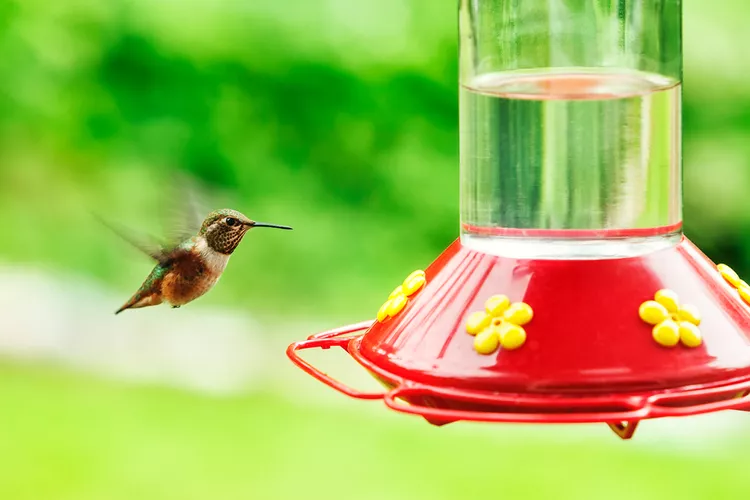
Many of us love attracting birds to our yards with feeders, but did you know that certain native plants work even better? Native plants offer birds natural food, shelter, and nesting sites year-round. Plus, their diverse food supply supports a wider variety of birds than feeders do. Here are 25 native trees, shrubs, vines, and flowers that birds adore. Plant a few (or all!) and transform your yard into a bird paradise.
Oaks
Sturdy and majestic, oaks (Quercus spp.) are among the best trees for birds. Oak trees support nearly 900 species of caterpillars, providing an important food source for young birds. Their acorns are also a favorite food of woodpeckers and jays, and their large branches and cavities provide birds with shelter and nesting sites. There are nearly 90 oak species in the United States, so look for a species native to your area.
Growing Conditions: Full sun and well-drained soil
Size: 50-100 feet tall, depending on the species
Zones: 3-10
Pines
Pine trees (Pinus spp.) are large, hardy conifers that range across North America. These versatile trees can stand alone as specimen trees or be grouped for windbreaks and screening. Their dense foliage provides excellent shelter and nest sites for birds. In spring, migratory warblers feast on insects hidden among the tree’s needles. In fall and winter, their seed-filled cones attract a wide variety of seed-eating birds like pine siskins, crossbills, chickadees, nuthatches, and woodpeckers.
Growing Conditions: Full sun and moist, well-drained soil
Size: 5-100 feet tall
Zones: 3-9
Birches
Birch trees (Betula spp.) are unmistakable with their white, papery bark, slender branches, and small, serrated leaves. Not only are they an attractive addition to a yard, but they are also one of the best trees you can plant to help birds. Birch bark shelters many insects, and their leaves feed hundreds of caterpillar species, both of which birds rely on to feed hungry nestlings. Their small seed clusters also attract birds like the goldfinch, redpolls, chickadees, and pine siskins.
Growing Conditions: Full sun with moist, well-drained soil
Size: 30-80 feet tall, depending on the species
Zones: 2-9
Willows
Willows (Salix spp.) are fast-growing trees and shrubs with slender branches and elongated leaves. They host hundreds of caterpillar species, which birds feed to their young. Their early-blooming flowers also attract insects, providing critical food for early-arriving migratory birds. Their dense foliage and flexible branches create perfect nesting sites for goldfinches, yellow warblers, and willow flycatchers. While weeping willows are non-native, there are many native species to choose from, such as black willows (Salix nigra) and pussy willows (Salix discolor).
Growing Conditions: Moist to wet areas
Size: 6-70 feet tall, depending on the species
Zones: 3-10
Serviceberry
Serviceberry (Amelanchier spp.) offers year-round interest with showy white flowers in spring, vibrant yellow, orange, and red foliage in fall, and an interesting branch structure in winter. The flowers attract insects in early spring, offering an essential protein source for birds during the nesting season. In early summer, small but nutritious berries (which humans can eat, too) are enjoyed by over 35 species of birds, including cedar waxwings, robins, catbirds, thrushes, and Baltimore orioles.
Growing Conditions: Moist soils in full sun to full shade
Size: 15-40 feet tall, depending on the species
Zones: 4-9
Mulberry
Mulberry trees (Morus spp.) are medium-sized trees that produce large, sweet berries that birds and humans enjoy in the summer. When fruiting, these trees attract cardinals, robins, waxwings, and many other songbirds. However, fallen mulberries are messy, so avoid planting near sidewalks, driveways, or parking areas. Opt for the red mulberry (Morus rubra), native to the eastern United States, or the Texas mulberry (Morus microphylla), native to the southwestern United States, and steer clear of the invasive white mulberry (Morus alba).
Growing Conditions: Full sun to part shade with well-drained soil
Size: 30-50 feet tall
Zones: 4-9 (red mulberry), 7-10 (Texas mulberry)
Dogwood
Heralded as one of America’s most beautiful native flowering trees, a dogwood tree (Cornus spp.) enhances your yard’s beauty while feeding the birds. Dogwoods are known for their gorgeous spring flowers and fiery fall leaf color. In late summer and early fall, their berries attract a variety of songbirds, including cardinals, titmice, and bluebirds. With 12 species of dogwoods native to the United States, you can find one ideally suited for your yard.
Growing Conditions: Part shade with moist, well-drained soil
Size: 6-40 feet tall, depending on the species
Zones: 2-9
Cherry and Plum Trees
Robins, catbirds, thrushes, cardinals, and other birds love the fruit of native cherries and plums (Prunus spp.). These trees are excellent hosts for caterpillars, an important food for birds feeding their developing young. A native black cherry tree (Prunus serotina, shown here) can support around 450 species of moths and butterflies. In contrast, a Japanese cherry tree (Prunus serrulata) only supports a few bird species that eat its fruit. There are around 20 species of native cherry and plum trees in North America, including well-known varieties such as the American plum, chokecherry, and black cherry.
Growing Conditions: Full sun with well-drained soil
Size: 15-80 feet tall, depending on the species
Zones: 2-9
Ninebark
Ninebark (Physocarpus spp.) is a fast-growing shrub that produces clusters of spirea-like flowers in spring and bright yellow foliage in fall, in addition to adding visual interest in winter. Their dense, mounded shape provides excellent nesting habitat for robins, song sparrows, cardinals, brown thrashers, indigo buntings, and catbirds. These same attributes also make it an ideal shrub for hedges and screening. Common ninebark (Physocarpus opulifolius) is native to the eastern and central United States, while mountain ninebark (P. monogynus) is found in the western United States.
Growing Conditions: Full sun with moist, well-drained soil
Size: 6-10 feet tall
Zones: 2-8
Elderberry
Tough and low-maintenance elderberry (Sambucus spp.) is an excellent addition to yards. The showy, fragrant flowers transform into delicious berries that can be made into syrups, jams, and even wine. Be prepared for some competition; elderberries are a favorite of warblers, orioles, tanagers, and catbirds.
Growing Conditions: Full to part sun with moist, well-drained soil
Size: 6-12 feet tall
Zones: 4-10
Raspberry and Blackberry
The thorny brambles of raspberries and blackberries (Rubus spp.) offer ideal cover and nesting spots for birds. Their nutrient-rich berries are favorites for fruit-eating birds, including robins, thrushes, waxwings, and orioles. Because they ripen over several weeks, the berries provide a prolonged food source, which ensures birds visit your yard longer (which is great for bird watching). However, these brambles can spread aggressively through underground runners. Installing physical barriers, like deep edging around their planted area, can help control their spread. Regular pruning can also keep them at a manageable height.
Growing Conditions: Full sun with fertile, well-drained soil
Size: 3-8 feet tall
Zones: 3-9
Currant
Hardy and adaptable currant (Ribes spp.) is an excellent low-growing shrub for a wide range of yards. Their berries are an important food source for thrushes, finches, robins, and waxwings during fall and winter months. Currant berries are tasty treats for humans, too. The American black currant (Ribes americanum) and golden currant (Ribes aureum) are often planted for culinary uses. As a bonus, currant shrubs lack the thorns found on many other berry bushes.
Growing Conditions: Full to part shade with moist, well-drained soil
Size: 3-10 feet tall, depending on species
Zones: 3-9
Chokeberry
Chokeberry (Aronia spp.) shrubs are delightful and thrive in various habitats, making them perfect for yards. Despite their alarming name, these edible berries have gained popularity as “superfoods” due to their high antioxidant content. Their berries are great for smoothies, jams, and sauces. Songbirds adore them, too. The berries remain on the plant well into winter, providing a reliable food source for birds when food is otherwise scarce. Unlike many other plants in this list, the native range of chokeberries is only eastern and central North America. Sorry, folks out west!
Growing Conditions: Full sun to part shade with well-drained, slightly acidic soil
Size: 3-8 feet tall
Zones: 3-9
Trumpet Honeysuckle
Easy to grow, well-behaved, and with abundant blooms, trumpet honeysuckle (Lonicera sempervirens) should be high on everyone’s list of natives to add to their yard. The scarlet tubular flowers of this shrubby vine are magnets for hummingbirds, and songbirds also eat their fruit. This native honeysuckle is a much better choice than the sweetly scented but invasive Japanese honeysuckle (Lonicera japonica).
Growing Conditions: Full sun with well-drained
Size: 3-8 feet long
Zones: 4-9
Virginia Creeper
Native to the eastern and central United States, Virginia creeper (Parthenocissus quinquefolia) is a robust vine that thrives in a variety of soil types and light conditions. Birds love its small, dark blue berries, especially in the fall and winter when food is scarce. The dense foliage also offers cover and nesting sites for birds. It can be used as a climbing vine or a groundcover to fill negative spaces in your yard. As a bonus, its leaves turn bright red in the fall. However, this vigorous vine can overwhelm other plants and structures if not properly managed.
Growing Conditions: Full sun to shade, adaptable to various soils
Size: 30-50 feet long
Zones: 3-9
Wild Grape
Wild grape (Vitis spp.) is a valuable addition to yards. Over 50 species of birds eat the fruit, and the vining plant’s dense foliage provides excellent shelter and nest sites. It can be trained to grow on fences, trellises, and pergolas, offering screening and shade. The fruit of wild grapes is edible for humans, and the leaves can be used to make delicious stuffed grape leaves.
Growing Conditions: Full sun with well-drained soil
Size: 50-100 feet long
Zones: 4-9
Purple Coneflower
Purple coneflower (Echinacea purpurea) has distinctive daisy-like flowers with purple petals that bloom from midsummer to early fall, adding long-lasting color to yards. The nectar-rich flowers attract bees and butterflies in the summer, while goldfinches, house finches, and pine siskins enjoy their seeds through the fall and winter. Different species of coneflowers are found throughout North America, so check which species are native to your area.
Growing Conditions: Full sun with well-drained soil
Size: 2-5 feet tall
Zones: 3-9
Cardinal Flower
Cardinal flower (Lobelia cardinalis) is a striking perennial well-known for showy blooms. The bright red, tubular flowers attract hummingbirds, whose long beaks and tongues perfectly suit the flower shape. Fun fact: The bright red petals look like the robes of Roman Catholic cardinals, which is how the plant got its name.
Growing Conditions: Full sun to partial shade with moist soil
Size: 2-4 feet tall
Zones: 3-9
Joe-Pye Weed
Joe-Pye weed (Eutrochium spp.) is a standout in the garden with its huge pinkish-purple flower heads. The seed heads provide fall and winter food for goldfinches, chickadees, dark-eyed juncos, and tufted titmice. These plants are easy to grow, and their tall stems fit perfectly in the back of a border garden. Several species of Joe-Pye weed grow in different regions and have different habitat preferences, so pick the one best suited for your location.
Growing Conditions: Full sun to partial shade with moist soil
Size: 3-7 feet tall
Zones: 4-9
Goldenrod
Goldenrod’s (Solidago spp.) plumes of bright yellow flowers add a needed splash of color to gardens in late summer and fall. In the summer, the flowers attract a variety of insects, which in turn feed insect-eating birds. In winter, goldfinches, sparrows, and juncos feast on their seeds. Goldenrod is frequently blamed for allergies since it blooms at the same time as ragweed, the true culprit. However, you don’t need to worry—goldenrod won’t trigger your allergies.
Growing Conditions: Full sun to partial shade with moist soil
Size: 3-7 feet tall
Zones: 4-9
Columbine
These whimsical flowers are unmistakable and always spark conversations in the garden. Luckily, several species of columbine (Aquilegia spp.) are native to North America. While the color of their flowers ranges from red, yellow, and even blue, they all sport spurred petals designed to attract hummingbirds, and you can prolong their bloom time from spring into early summer by removing spent flowers. This is a must-have flower for anyone wanting to attract hummingbirds to their yard.
Growing Conditions: Full sun to partial shade with well-drained soil
Size: 1-3 feet tall
Zones: 3-8
Sunflower
Sunflowers (Helianthus spp.) are not only beautiful, but they’re also an excellent food source for birds. Mourning doves, chickadees, finches, and sparrows love their nutritious seeds. Sunflowers attract over 70 caterpillar species, which birds feed to their nestlings. While many sunflowers require full sun, some species, such as the woodland sunflower (Helianthus divaricatus), can tolerate some shade, making them suitable for woodland edges and partially shaded garden spots.
Growing Conditions: Full sun to part shade (depending on the species) with well-drained soil
Size: 3-10 feet tall, depending on the species
Zones: 4-9
Aster
The colorful, daisy-like flowers of asters (Symphyotrichum spp.) will brighten up your garden from late summer to fall. Although their flowers are small, each plant can produce hundreds of them, resulting in an abundance of seeds that feed birds through the winter. Goldfinches, house finches, juncos, and chickadees particularly love aster seeds. The over 100 native aster species in North America come in a kaleidoscope of colors and can tolerate a variety of conditions. So, you’re sure to find one or more that works for your space.
Growing Conditions: Full to part shade with well-drained soil
Size: 1-6 feet tall, depending on the species
Zones: 3-8
Jewelweed
Extremely hardy and wide-ranging, jewelweed (Impatiens capensis) is a cheerful plant for shady areas of your yard where other plants struggle to grow. A native relative of garden impatiens, jewelweed is a self-seeding annual that forms dense clusters. Its vibrant orange, orchid-like flowers bloom from summer through fall and are irresistible to hummingbirds. While often overlooked for home gardens, biologists consider jewelweed one of the most important sources of late-summer nectar for hummingbirds as they prepare for their migrations south.
Growing Conditions: Shade to part sun with moist soil
Size: 2-5 feet tall
Zones: annual
Black-Eyed Susan
Black-eyed Susan (Rudbeckia spp.) is an iconic wildflower that works well in the home garden. Its yellow and black, daisy-like flowers are beautiful to behold, and goldfinches adore the seeds. There’s nothing quite like watching these gold and black birds perch on the stalks of the gold and black plants as they feast.
Growing Conditions: Full sun with well-drained soil
Size: 2-3 feet tall
Zones: 3-9