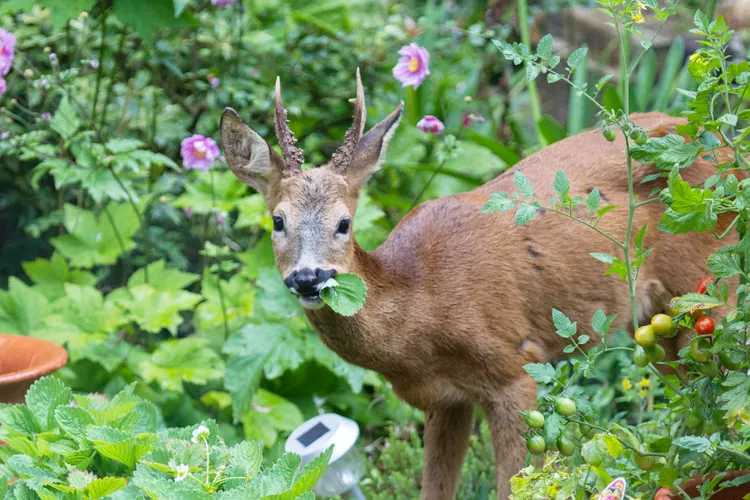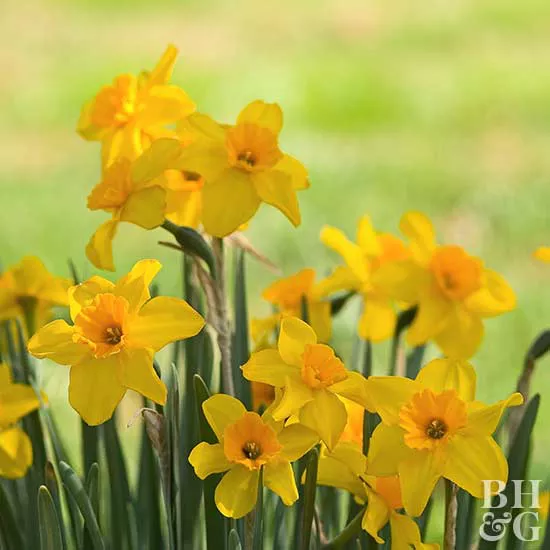
Although the terms jonquil and daffodil are often used interchangeably, jonquils represent only a single species of daffodil (Daffodil is the common name for the genus Narcissus — which includes dozens of species). Jonquils bear one to five golden-yellow flowers per stem and are usually quite fragrant. These prolific bloomers share many traits with other members of the Narcissus family, which all thrive in well-drained soil and full sun. Deer and rodents seldom bother them. Plus, they come back year after year and multiply rapidly with little care. What's not to love?
Jonquil Daffodil Overview
| Genus Name | Narcissus hybrids |
| Common Name | Jonquil Daffodil |
| Plant Type | Bulb |
| Light | Part Sun, Sun |
| Height | 6 to 12 inches |
| Width | 4 to 6 inches |
| Flower Color | Orange, Pink, White |
| Foliage Color | Chartreuse/Gold |
| Season Features | Spring Bloom |
| Special Features | Cut Flowers, Good for Containers, Low Maintenance |
| Zones | 3, 4, 5, 6, 7, 8, 9 |
| Propagation | Division |
| Problem Solvers | Deer Resistant, Drought Tolerant |
When to Plant Jonquil
Jonquil, like all spring-flowering bulbous perennials, requires planting a few months prior to bloom. Best planted in mid-autumn after the soil begins to cool, this plant establishes a strong root system in fall and early winter. Purchase jonquil bulbs at your local garden center or online from a reputable vendor. Look for large, firm bulbs that have a dry, papery covering.
Jonquil Care Tips
Jonquil grows best in organically rich, well-drained soil. (Bulbs quickly rot in wet, poorly-drained soil.) The site should receive at least six hours of direct sun per day throughout the springtime bloom season. When blooming, the flowers typically face the sun, so make sure any shade is at the back of the site to get forward-facing flowers.
Bulbs are generally planted 3 to 5 inches deep and 3 to 6 inches apart. You may want to think "large trench" instead of "individual planting hole" though because a mass of daffodils is more eye-pleasing than rows of bulbs standing like soldiers in the garden. And you don't have to use a bulb auger or spade to place bulbs one by one. A shovel makes quick work out of planting dozens. Dig a trench, then plant the bulbs close together with the pointy ends facing up. Cover with soil, then water well to get rid of air pockets. Step back and await a drift of color in the spring. Plant groups of 10 to 20 jonquil bulbs along walkways, near entryways, and around patios so the following spring you can enjoy their beauty and fragrance up close.
If you have a potted jonquil that has been forced to bloom, plant it in a perennial bed to begin years of enjoyment. Treat it like plants grown from bulbs. Wait until the foliage turns yellow and dies back, then dig up the bulb and brush off the dirt. Store it in a cool dark place until fall, then plant as you would any jonquil bulb.
Warning
All parts of the jonquil bulb and plant are toxic and may cause stomach distress.
Postbloom Care
After its flowers fade, jonquil's green strappy foliage channels energy into replenishing resources in the bulbs. Leave foliage in place until it withers and turns yellow. Plan ahead to hide the yellowing foliage by planting jonquil bulbs among other perennials like peony (Paeonia), Russian sage (Perovskia atriplicifolia), daylilies (Hemerocallis), and catmint (Nepeta). Their emerging foliage will mask the withering jonquil leaves.
Varieties of Jonquil Daffodil
'Pappy George' Jonquil
Narcissus 'Pappy George' offers amber-yellow petals and a reddish-orange cup. The bulb produces two or three fragrant flowers per stem, reaching up to 16 inches tall. It blooms in mid-spring. Plant in zones 4–9.
'Intrigue' Jonquil
This selection of Narcissus is a jonquil type of daffodil with variable flower color. Most have chartreusy-yellow petals with a white halo in the center. The scalloped cup may be cream, white, or pastel yellow. The fragrant blooms appear in mid- to late spring on stems to 16 inches tall. Plant in zones 4–9.
'Baby Moon' Jonquil
Narcissus 'Baby Moon' is a late-spring blooming variety that grows 6-12 inches tall and has clear yellow petals with a flattened yellow cup. It produces several flowers per stem. Plant in zones 3–9.
'Pipit' Jonquil
This Narcissus cultivar is an award-winning selection that bears two or three fragrant pale lemon-yellow flowers per stem. Each bloom has a white halo and white cup. The flowers, which are excellent for cutting, appear in early spring on stems to 16 inches tall. Plant in zones 4–9.
'Quail' Jonquil
Narcissus 'Quail' offers butter-yellow flowers crowned by slightly darker cups that spill their sunny cheer in rock gardens and other crevices in mid- to late spring. It grows 14 inches tall. Plant in zones 4–9.
'Suzy' Jonquil
This selection of Narcissus bears two or three fragrant flowers per stem. The yellow blooms have orange cups. It grows 16–20 inches tall and blooms in late spring. Plant in zones 3–9.