When and How to Harvest Thyme Without Killing the Plant

10.4K
727
174
2025-10-22
When and How to Harvest Thyme Without Killing the Plant

Thyme is a woody-stemmed herb from the Mediterranean region that lends big flavor to foods with its tiny leaves. Knowing how to harvest thyme correctly is important to prevent too much woodiness. Also, if you pick too much of this herb at once, you risk damaging or even killing the plant. This guide explains when and how to harvest thyme to ensure you get the freshest herbs and keep your thyme plants healthy.

When to Harvest Thyme

Harvesting thyme regularly keeps thyme plants from becoming woody and encourages plants to leaf out and produce more branches. Harvesting thyme throughout the season provides your kitchen with all the fresh thyme you need for your favorite recipes. However, thyme can be harvested in different ways, depending on how you want to use the fresh herbs and if you intend to dry them.

For the best result, pick thyme in the early morning after the dew has dried on the plant’s leaves. This enhances the flavor of thyme leaves and helps ensure the fresh thyme dries quickly.

If you need only a sprig or two of thyme to use in cooking, you can harvest the thyme at any point during the growing season by clipping away a few branches. Fresh thyme sprigs regrow quickly, and since you’re not taking many leaves off the plant, you don’t need to worry about overpruning.

However, if you want to harvest a large amount of thyme for drying, only harvest thyme two or three times a year. Ideally, large thyme harvests should occur in spring and again in early summer, right before thyme plants flower. Harvesting thyme before the plant blooms results in the tastiest herbs because the plant’s leaves are packed with flavorful oils at this point in the growing season. If needed, thyme plants can be harvested again in August, but harvesting thyme later than that is not recommended because the plants need time to recover before winter.

How to Harvest Thyme Correctly

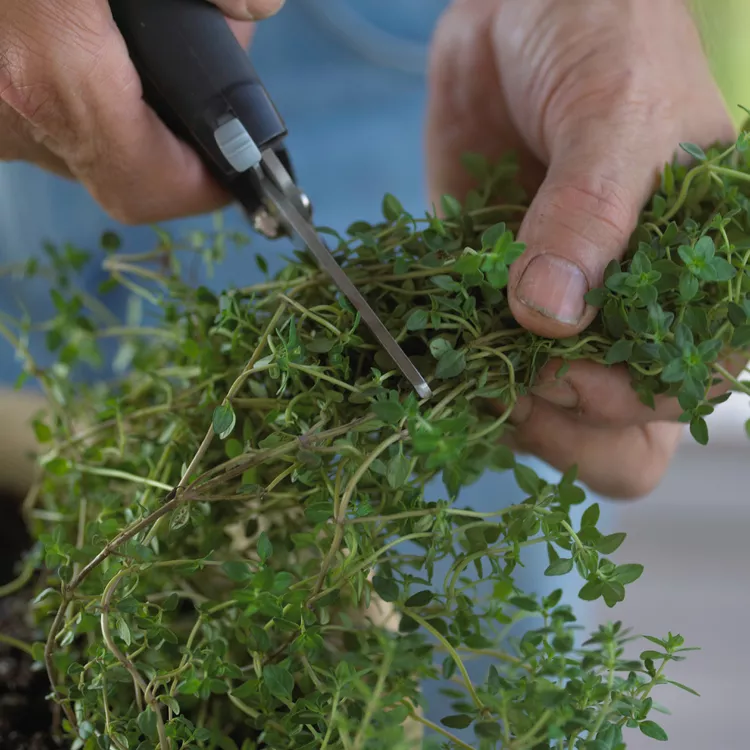
When you are harvesting only a few sprigs of thyme, clip off the thyme branches you need with sharp scissors or pruners. Cut young, tender thyme branches all the way down to the soil and woody branches immediately above a leaf node to encourage branching.

Keep rubber bands around your wrist when you harvest thyme, and bundle the thyme sprigs as you work. This keeps you from dropping the herb in your culinary gardens and makes it easier to air-dry the fresh thyme later on.

For larger thyme harvests, use sharp scissors or pruners and clip away the top one-third to one-half of the plant, making the pruning cut immediately above a leaf node. Start with the biggest, most mature thyme stems and work your way around the plant, harvesting and shaping the thyme as you go. Just make sure to never harvest more than half the height of the plant at one time and leave at least 5 inches of stems and plenty of green leaves on the plant after harvesting.

If you harvest more thyme than you can use, you can propagate thyme stem cuttings in soil with a bit of rooting hormone.

How to Store Fresh Thyme

You can use fresh thyme straight out of the garden or store it in your fridge for up to two weeks by wrapping thyme sprigs in a beeswax wrap or a plastic baggie. For longer-term storage, freeze thyme in ice cube trays or dry it by air-drying or with a food dehydrator.

When air-drying, hang small bundles of thyme in a cool, dark place that’s out of direct sunlight and allow the thyme to dry for one to two weeks. You’ll know the thyme is thoroughly dried when you can easily crumble the stems and leaves between your fingers. After the thyme is completely dry, store it whole in airtight containers for up to two years, and only crush or grind dried thyme just before you intend to use it to ensure the leaves retain their flavorful oils.

How to Continue Harvesting Thyme in Winter

Thyme will either stop growing or die down in winter and will start growing again during the spring. However, if you want to continue harvesting thyme during the colder months of the year, you can plant it in potted containers and bring them indoors. Place them in a sunny location with loamy, well-draining soil to continue your harvest.
Frequently Asked Questions

  • Can I eat the flowers on thyme?

    Although thyme leaves taste best if you harvest them before the plant flowers, you can still eat thyme leaves and flowers after the plant blooms. Dainty and colorful, thyme flowers make charming garnishes for salads, soups, and desserts.

  • What temperature do you use to dry thyme?

    Thyme can be air-dried or dried in a dehydrator or an oven set at the lowest setting. For dehydrators and ovens, dry thyme at approximately 105°F until it easily crumbles in your fingers. This process takes about two to five hours.

  • When you chop thyme, do you keep the stems?

    Whether you chop thyme with or without the stems is a matter of personal preference. Thyme stems are technically edible; you can chop them up with the thyme leaves. However, mature thyme stems can be woody and tough, so you might want to remove them before chopping the thyme.

  • Is thyme a perennial or annual plant?

    Thyme plants are perennials that will come back every single year, so they won't need to be replanted in your herb gardens. On average, they will last between four and six years.

Related Article

How to Propagate Pothos Successfully in Soil or Water
40.9K
408
61

How to Propagate Pothos Successfully in Soil or Water

Learn how to propagate pothos plants successfully with these simple step-by-step instructions.
24 Easy-Care Houseplants With Low Watering Needs
16.7K
334
93

24 Easy-Care Houseplants With Low Watering Needs

The low-maintenance, easy-care houseplants in this collection add lushness and color to any home without needing much more than occasional watering.
How to Plant and Grow Philodendron
38.6K
772
270

How to Plant and Grow Philodendron

Find growing information on philodendron, the perfect houseplant for new plant owners.
How to Get Rid of Spider Mites on Indoor Plants
46.1K
4.1K
1.9K

How to Get Rid of Spider Mites on Indoor Plants

Spider mites are a common houseplant pest. Learn the early signs of spiders mites on your plants and how to get rid of them.
16 Small Backyard Garden Ideas for Maximizing Your Landscape
36.4K
3.3K
820

16 Small Backyard Garden Ideas for Maximizing Your Landscape

Even the tiniest landscapes can be magical outdoor spaces with these small backyard garden ideas that maximize your yard.
Here's How to Dry and Preserve Flowers to Enjoy Their Beauty Year-Round
37.9K
3K
1.2K

Here's How to Dry and Preserve Flowers to Enjoy Their Beauty Year-Round

Learn how to dry flowers with air drying, silica gel, or even the microwave. These three methods to preserve flowers are great for wreaths, bouquets, and decorating projects.
How to Clean a Hummingbird Feeder in 5 Easy Steps
9.2K
184
51

How to Clean a Hummingbird Feeder in 5 Easy Steps

Keep your garden a safe and welcoming space for hummingbirds by following our five-step guide for how to clean hummingbird feeders.
How to Plant and Grow Angelonia
7K
140
26

How to Plant and Grow Angelonia

Angelonia (or summer snapdragon) is a spectacular addition for continuous color in any garden.
How to Plant and Grow Agapanthus
18.4K
1.8K
330

How to Plant and Grow Agapanthus

Agapanthus is a low-maintenance perennial and landscape staple that produces clusters of trumpet-shaped flowers.
How to Plant and Grow Shrub Roses
40.7K
3.7K
696

How to Plant and Grow Shrub Roses

Learn to grow shrub roses, which combine all of the best characteristics of roses into a beautiful, low-maintenance plant.
11 Best Deer-Resistant Shrubs for Avoiding Browsing Damage
38.2K
1.5K
504

11 Best Deer-Resistant Shrubs for Avoiding Browsing Damage

No plant is completely safe, but these deer resistant shrubs tend to be low on the menu for hoofed garden visitors.
What's Causing Your Gardenia's Yellow Leaves? We Have Answers
16.5K
1.5K
251

What's Causing Your Gardenia's Yellow Leaves? We Have Answers

What causes your gardenia's yellow leaves? Here's the reason and how to fix it. Gardenias are high-maintenance, but this is how to make them happy.
How to Plant and Grow Jasmine
42.3K
3.8K
418

How to Plant and Grow Jasmine

Jasmine is a perennial shrub or vine beloved for its fragrant flowers. Learn how to grow it in your garden or as a houseplant.
Do Deer Eat Tomato Plants? 5 Ways to Protect Your Harvest
42.1K
1.7K
775

Do Deer Eat Tomato Plants? 5 Ways to Protect Your Harvest

Deer do eat tomato plants from time to time. Here's how to recognize deer damage on tomatoes and how to prevent the creatures from ruining your crop.
11 Simple Tips for Growing Carrots in Containers Successfully
31.7K
317
44

11 Simple Tips for Growing Carrots in Containers Successfully

Growing carrots in containers saves space and protects carrot roots from pests. Here's how to plant and grow carrots in pots.
Which Types of Garlic Are Best to Grow in Your Garden?
32.5K
3.2K
1K

Which Types of Garlic Are Best to Grow in Your Garden?

Hardneck or softneck? Here’s what to know about different types of garlic and how to grow them.
How to Plant a Mango Seed and Successfully Grow It in 5 Steps
40.3K
805
152

How to Plant a Mango Seed and Successfully Grow It in 5 Steps

Learn how to plant a mango seed and grow it with only a few basic supplies and a little time. Use this guide to grow a mango seed successfully.
What Is a Fairy Ring? And Will It Harm Your Lawn?
23.4K
2.3K
1.1K

What Is a Fairy Ring? And Will It Harm Your Lawn?

Find out what causes those mysterious circles of mushrooms on your lawn and how to prevent fairy rings.
How to Grow Plants from Cuttings to Fill More Pots for Free
32.7K
981
245

How to Grow Plants from Cuttings to Fill More Pots for Free

Use this simple propagation technique to grow new plants with stem cuttings.
Easy Lawn Repair for Patchy Grass Using Seed or Sod
10.2K
812
292

Easy Lawn Repair for Patchy Grass Using Seed or Sod

With a bit of grass seed or sod, lawn repair is easy, and you’ll soon have a lush green carpet again.