Do Deer Eat Tomato Plants? 5 Ways to Protect Your Harvest

42.1K
1.7K
775
2025-11-07
Do Deer Eat Tomato Plants? 5 Ways to Protect Your Harvest

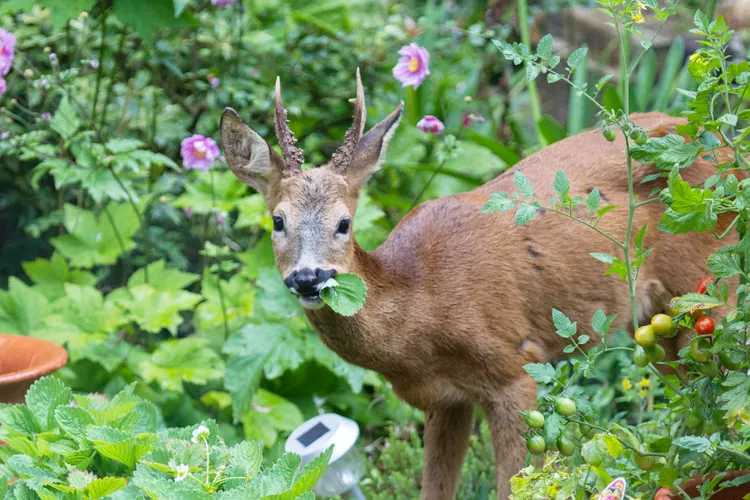
Deer are a delight to watch from a distance, but when they‘re traipsing through your vegetable garden, you may find yourself wondering, "Do deer eat tomato plants?" And if these four-legged visitors start munching on your plants, delight is probably the last word on your mind. Many vegetables, along with favorite shrubs, perennials, and annual flowers can become a buffet for these voracious creatures. Learn how to identify deer damage on tomato plants and how to protect your crop.

Deer and Tomatoes

Vegetable gardens offer a tasty bounty for both humans and deer. As their native environment is increasingly taken up by housing developments, deer are forced into smaller and smaller habitats. They quickly become accustomed to suburban living and are drawn to vegetable gardens where the food sources are plentiful and nutritious.

Humans and deer also share many favorite edible plants, including beans, beets, broccoli, cabbage, lettuce, strawberries, and sweet corn. Tomatoes are notably not on the preferred plant list for deer, but these animals can be unpredictable and may take a few bites of pungent tomato foliage or ripe fruit if other food sources are limited.

Plant companion vegetables and herbs that deer rarely browse due to their prickly texture or pungent odor near tomato plants. These include chives, cucumbers, eggplant, leeks, onions, rosemary, rhubarb, and sage.

Identifying Deer Damage on Tomatoes

Tomato plants are susceptible to deer at any time during their development, from the seedling stage to harvest time. If your tomato plant is missing leaves or sporting damaged fruit, deer might be the cause. Begin by looking for deer tracks around your plants. Their cloven hoof prints are easy to spot.

Deer-damaged foliage has a rough, jagged edge because deer lack upper incisor teeth. They bite down on a leaf and pull, leaving behind a ragged remnant. Leaf damage caused by rodents, such as rabbits and chipmunks, has a regular, straight margin. Deer take a bite out of ripe tomatoes or eat whole fruit, depending on the size.

Peak feeding time is early morning and late evening. Although deer are rarely seen feasting in the garden, they usually leave behind plenty of evidence of their presence.

5 Ways to Protect Your Tomatoes from Deer

If you suspect deer have been snacking on your tomato plants, you may want to consider the following options for keeping the critters from wrecking your harvest.

1. Install a deer fence.

A fence is the best way to keep deer away from plants you don't want them to eat. Most traditional landscape fences won’t keep out deer. These large, agile creatures can easily jump a standard 4-foot-tall fence. Height is key to excluding deer from a large area such as an entire vegetable garden or backyard.

The best deer fence is 8 feet tall. Many commercial deer fence options are available, but they come with a high price tag. You can make your own 8-foot-tall deer fence by stacking two 4-foot widths of wire fencing on top of each other.

A well-built and regularly maintained electric fence can also serve as a deer barrier. An electric fence doesn’t need to be 8 feet tall to be effective; 4- to 5-foot-tall electric fences usually keep deer out.

2. Build a micro-enclosure.

Wildlife specialists have found that deer avoid entering small spaces. The animals perceive the small space as being too risky for fast entry and exit. Gardeners can use this to their advantage. Erect a standard 4-foot-tall fence around a tomato patch measuring no more than 16 feet long and 16 feet wide. Research has shown that deer are regularly deterred by the 16-foot square, leaving the plants growing inside alone.

3. Hang a bar of soap nearby.

If you are protecting a single tomato plant in a container or a small, raised bed, having a bar of very fragrant bath soap nearby can keep deer from browsing your tomatoes. Begin with the right soap for the job—an individually wrapped, highly fragrant small bar. Leave the bar wrapped and drill a small hole through the soap. Thread a piece of yarn or jute through the hole and hang the bar of soap on a stake near a tomato plant. If you have several tomato plants, place several bars of soap around the perimeter of the planting.

Deer tend to become accustomed to a strong scent over time, so switch your repellent of choice every few weeks to keep them from becoming too comfortable with a particular odor.

4. Spray the soil with a raw egg mixture.

 Wildlife specialists have found that a raw egg slurry can effectively repel deer. To make it, mix a dozen raw eggs with 5 gallons of water and apply it to the soil around tomato plants with a sprayer. The eggs quickly rot in the ground, producing a putrid odor that is detected by deer but not by humans. Reapply the egg and water mixture after every rain.

5. Sprinkle the soil with bone meal and blood meal.

Typically used as soil enhancements, blood meal and bone meal have also proven helpful in repelling deer. Mix blood meal and bone meal together in a 1 to 1 ratio and sprinkle the dry product on the soil around tomato plants. Reapply after every rain.
Sources
Better Homes & Gardens is committed to using high-quality, reputable sources—including peer-reviewed studies—to support the facts in our articles. Read about our editorial policies and standards to learn more about how we fact check our content for accuracy.
  1. https://extension.umn.edu/central/protecting-plants-deer

Related Article

How to Propagate Pothos Successfully in Soil or Water
40.9K
408
61

How to Propagate Pothos Successfully in Soil or Water

Learn how to propagate pothos plants successfully with these simple step-by-step instructions.
24 Easy-Care Houseplants With Low Watering Needs
16.7K
334
93

24 Easy-Care Houseplants With Low Watering Needs

The low-maintenance, easy-care houseplants in this collection add lushness and color to any home without needing much more than occasional watering.
How to Plant and Grow Philodendron
38.6K
772
270

How to Plant and Grow Philodendron

Find growing information on philodendron, the perfect houseplant for new plant owners.
How to Get Rid of Spider Mites on Indoor Plants
46.1K
4.1K
1.9K

How to Get Rid of Spider Mites on Indoor Plants

Spider mites are a common houseplant pest. Learn the early signs of spiders mites on your plants and how to get rid of them.
16 Small Backyard Garden Ideas for Maximizing Your Landscape
36.4K
3.3K
820

16 Small Backyard Garden Ideas for Maximizing Your Landscape

Even the tiniest landscapes can be magical outdoor spaces with these small backyard garden ideas that maximize your yard.
Here's How to Dry and Preserve Flowers to Enjoy Their Beauty Year-Round
37.9K
3K
1.2K

Here's How to Dry and Preserve Flowers to Enjoy Their Beauty Year-Round

Learn how to dry flowers with air drying, silica gel, or even the microwave. These three methods to preserve flowers are great for wreaths, bouquets, and decorating projects.
How to Clean a Hummingbird Feeder in 5 Easy Steps
9.2K
184
51

How to Clean a Hummingbird Feeder in 5 Easy Steps

Keep your garden a safe and welcoming space for hummingbirds by following our five-step guide for how to clean hummingbird feeders.
How to Plant and Grow Angelonia
7K
140
26

How to Plant and Grow Angelonia

Angelonia (or summer snapdragon) is a spectacular addition for continuous color in any garden.
How to Plant and Grow Agapanthus
18.4K
1.8K
330

How to Plant and Grow Agapanthus

Agapanthus is a low-maintenance perennial and landscape staple that produces clusters of trumpet-shaped flowers.
How to Plant and Grow Shrub Roses
40.7K
3.7K
696

How to Plant and Grow Shrub Roses

Learn to grow shrub roses, which combine all of the best characteristics of roses into a beautiful, low-maintenance plant.
11 Best Deer-Resistant Shrubs for Avoiding Browsing Damage
38.2K
1.5K
504

11 Best Deer-Resistant Shrubs for Avoiding Browsing Damage

No plant is completely safe, but these deer resistant shrubs tend to be low on the menu for hoofed garden visitors.
What's Causing Your Gardenia's Yellow Leaves? We Have Answers
16.5K
1.5K
251

What's Causing Your Gardenia's Yellow Leaves? We Have Answers

What causes your gardenia's yellow leaves? Here's the reason and how to fix it. Gardenias are high-maintenance, but this is how to make them happy.
How to Plant and Grow Jasmine
42.3K
3.8K
418

How to Plant and Grow Jasmine

Jasmine is a perennial shrub or vine beloved for its fragrant flowers. Learn how to grow it in your garden or as a houseplant.
Do Deer Eat Tomato Plants? 5 Ways to Protect Your Harvest
42.1K
1.7K
775

Do Deer Eat Tomato Plants? 5 Ways to Protect Your Harvest

Deer do eat tomato plants from time to time. Here's how to recognize deer damage on tomatoes and how to prevent the creatures from ruining your crop.
11 Simple Tips for Growing Carrots in Containers Successfully
31.7K
317
44

11 Simple Tips for Growing Carrots in Containers Successfully

Growing carrots in containers saves space and protects carrot roots from pests. Here's how to plant and grow carrots in pots.
Which Types of Garlic Are Best to Grow in Your Garden?
32.5K
3.2K
1K

Which Types of Garlic Are Best to Grow in Your Garden?

Hardneck or softneck? Here’s what to know about different types of garlic and how to grow them.
How to Plant a Mango Seed and Successfully Grow It in 5 Steps
40.3K
805
152

How to Plant a Mango Seed and Successfully Grow It in 5 Steps

Learn how to plant a mango seed and grow it with only a few basic supplies and a little time. Use this guide to grow a mango seed successfully.
What Is a Fairy Ring? And Will It Harm Your Lawn?
23.4K
2.3K
1.1K

What Is a Fairy Ring? And Will It Harm Your Lawn?

Find out what causes those mysterious circles of mushrooms on your lawn and how to prevent fairy rings.
How to Grow Plants from Cuttings to Fill More Pots for Free
32.7K
981
245

How to Grow Plants from Cuttings to Fill More Pots for Free

Use this simple propagation technique to grow new plants with stem cuttings.
Easy Lawn Repair for Patchy Grass Using Seed or Sod
10.2K
812
292

Easy Lawn Repair for Patchy Grass Using Seed or Sod

With a bit of grass seed or sod, lawn repair is easy, and you’ll soon have a lush green carpet again.