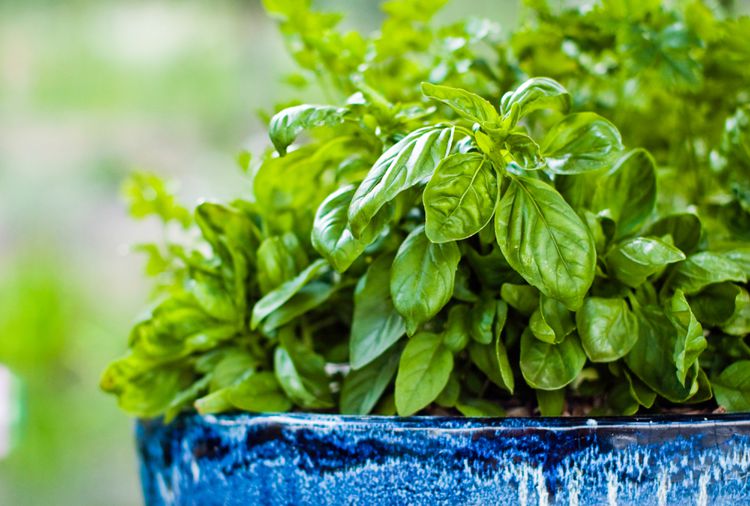
There’s no such thing as too much basil if you love making pesto and cooking with fresh herbs. This popular herb thrives in garden beds, but growing basil in pots indoors on a sunny windowsill or outside on a sunny patio or balcony is also an easy way to boost your supply of this compact and fast-growing plant. Use these simple tips to start growing basil in pots for space savings, fewer pests, and having indoor herbs that can be harvested in any season.
1. Try different basil varieties.
Genovese basil is the most popular basil variety for pesto making and Caprese salads. But there are other colorful and tasty types of basil to grow if you want to explore different flavors or use basil plants for ornamental appeal. Thai basil, purple basil, cinnamon basil, and holy basil all have similar care needs to Genovese types and all of them grow well in small pots or window boxes.
2. Choose the right pot.
Basil plants are relatively small, so you don’t need a massive pot to keep them happy. Small, 6-inch terracotta pots are suitable for a single basil plant, although larger pots, planters, and grow bags will accommodate multiple plants. Just make sure to select a container with drainage holes in the base to prevent soggy soil, and use a well-draining, yet rich, potting mix.
3. Provide plenty of light.
Full sun locations that receive at least 6 to 8 hours of bright light daily are usually the best options for growing basil in pots or garden beds. But if you live in a hot climate, you may want to keep basil in an area that receives light shade in the afternoon to avoid scorched leaves and wilted stems. Indoor basil can be placed on a sunny windowsill or under a small grow light if your home doesn’t receive much natural light.
4. Grow basil from seeds.
You can start growing basil in pots with seeds or nursery starts but growing plants from seed is usually the cheapest option. Start seeds indoors about 5 to 6 weeks before your area's last frost date in spring, planting the seeds ¼ inch deep in pots or trays filled with a quality seed starting mix. Keep the seeds under a grow light and water regularly until the seedlings sprout and can be transplanted into larger containers.
5. Harden off transplants.
If you start basil seedlings indoors, don’t rush to put them outside in spring. Basil plants don’t tolerate cold temperatures and they shouldn’t be moved into outdoor pots until they have multiple sets of leaves and temperatures are consistently above 50°F. Plants started indoors should be hardened off before transplanting, while plants purchased from outdoor nurseries may not need this treatment.
6. Water regularly.
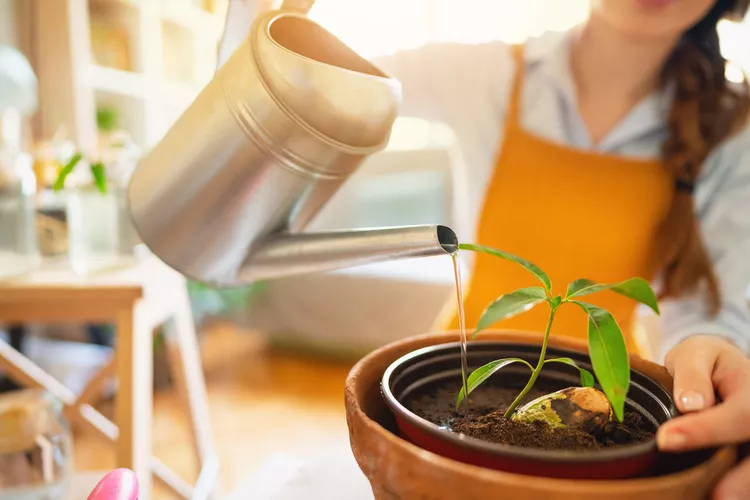
Unlike lavender and other Mediterranean herbs, basil loves water and moist soil. To keep potted basil plants healthy, water regularly when the top 1 inch of potting mix feels dry and add a thin layer of mulch across the surface of the soil to slow down evaporation. Aim your hose or watering can at the soil line to keep basil leave dry and mildew-free.
7. Fertilize as needed.
Start the growing season off the right way by planting basil in potting mix amended with a bit of compost or worm castings. While basil is not a heavy feeder, the extra nutrients will help plants grow even better. After that, feed your basil about once a month with a liquid, organic fertilizer diluted to half strength.
8. Pinch back growing stems.
When basil plants are about 4 to 6 inches tall, pinch back the plants’ central stems to just above a lower set of leaves to encourage branching. Throughout the season, continue to prune back stems on potted basil that are at least 6 inches long by cutting them back to a leaf node. This will make basil bushier and help you grow a larger harvest of fresh leaves.
9. Harvest often.
You can start harvesting basil when plants are between 6 and 8 inches tall and have lots of lush leaves. Harvest a few leaves from your plants at a time, but never pick more than a third of your plant’s leaves in one go. Picking basil leaves regularly makes plants more productive, but if you love making pesto, you may want to grow more than one basil plant in pots to make sure you have enough leaves for your recipes.
10. Watch for pests.
Pests are usually less problematic when growing basil in pots, but they can still crop up from time to time. If you’re keeping your basil outdoors, be on the lookout for aphids, Japanese beetles, and slugs. Aphids are easy to control with organic soap sprays, while hand-picking can work wonders for slugs and beetle pests.
11. Keep plants warm.
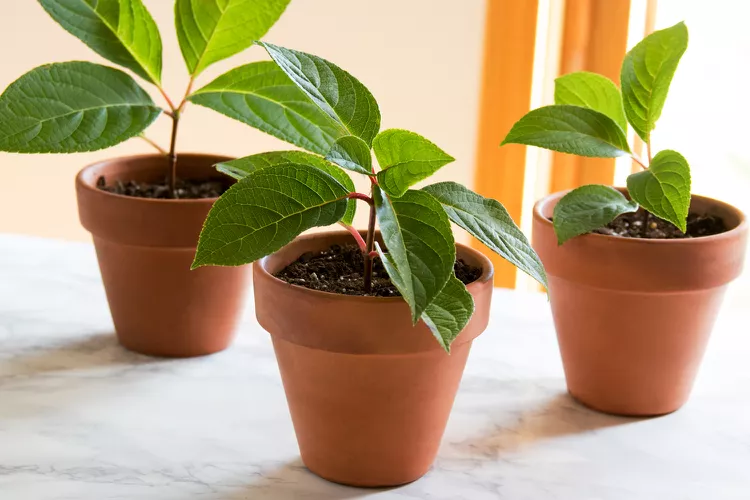
Basil is technically a perennial plant, but it’s mostly grown as an annual because it does not tolerate cold weather. If you live in a warm location, you may be able to keep plants outdoors year round, but gardeners in chillier climates can bring potted basil inside during winter to extend their harvesting season. Large pots of basil may be difficult to move inside, but you can always take a few stem cuttings and propagate them to create new basil plants for a windowsill herb garden.
12. Try companion planting.
While you can grow basil in its own dedicated pot, you can also interplant basil in roomy containers with other veggies or herbs. Basil is a particularly good companion plant for potted tomatoes, as basil’s aromatic leaves help repel certain pests. However, basil also grows beautifully with potted peppers, eggplants, and many root veggies.