How to Grow Plants from Cuttings to Fill More Pots for Free

32.7K
981
245
2025-11-06
How to Grow Plants from Cuttings to Fill More Pots for Free

Want more plants in your garden? Um, of course! But did you know that you can quickly expand your collection by rooting stems trimmed from many of your outdoor plants? It almost seems magical how their stems, when snipped at the right time, can develop roots and become brand new plants. Plus, stem cuttings can give you full-grown plants in half the time it takes to start from seed. How to pull off this amazing propagation trick depends on the type of plant. Woody plants, such as shrubs and some perennials, root best when treated with a rooting hormone and placed into a potting mix. Many soft-stemmed plants can produce roots in just a vase of water.

When to Make Cuttings

Most stem cuttings can be rooted anytime the plants are actively growing. Coleus and geranium, for example, grow year-round (except where winters are freezing). Take cuttings from these annuals whenever you want to make more of them.

Woody plants, which can be a little trickier to root, are best harvested at specific times in their growing cycle. There are several different types of woody plant cuttings, but the steps for rooting the stems are all the same. Bottom line: It might take some experimenting to learn when your plant is best suited for cutting. Here are some of the common terms you'll see when researching plants to propagate.

Softwood cuttings: made from fresh, new growth, usually in spring or early summer. Plants such as butterfly bush, rosemary, and dogwood root well from softwood cuttings.

Greenwood cuttings: taken from young stems that are starting to mature, but still in their first year. They're usually cut in early to midsummer. Shrubs such as gardenia and boxwood tend to root well from greenwood cuttings.

Semi-hardwood cuttings: tougher and more mature. These are usually taken from midsummer to fall. Shrubs such as camellia and honeysuckle often root well from semi-hardwood cuttings.

Hardwood cuttings: taken from woody stems that have shed their leaves and gone dormant in late fall or winter. Trees and shrubs such as mock orange and viburnum often root well from hardwood cuttings.

Supplies for Cuttings

Before you start snipping, make sure you have the equipment you need to grow a new plant. Don't just grab a pair of scissors; be ready to apply rooting hormone and pot your new cuttings right away.

Sharp knife or pruning shears

Clean your cutting tools with hot, soapy water before making cuttings to eliminate introducing any diseases to the cuttings.

Containers for potting up the cuttings

Good drainage is key, so choose a container with drainage holes where excess water can trickle out.

Potting mix, perlite, vermiculite, or sand

You can often find a mix formulated for seed starting that also works well for cuttings.

Rooting hormone

Plants naturally produce a hormone called auxin that helps roots grow, and garden centers sell synthetic forms as "rooting hormone." Usually a dry powder, rooting hormone is worth the small investment because it increases your cuttings' success. It's often sold in different concentrations, and using the correct concentration recommended for your type of cutting is important.

Step 1: Cut Off a Section of Stem

Early morning is usually the best time to harvest cuttings because plants usually have the most moisture at this time. Select a section of healthy growth that's 3 to 6 inches long. Using a sharp knife or pruning shears, make a clean cut. Crushing or tearing the stem may make it more difficult for the shoot to develop new roots. Keep cuttings cool and moist until you've potted them by placing the cut ends in water or stashing your cuttings in a plastic bag with a moist paper towel wrapped around them.

Step 2: Remove the Lower Leaves

Clip off the leaves on the lower half of the shoot so you have a bare stem to insert into your potting mix. Then, if you want, dip the end of your stem in rooting hormone. This generally helps cuttings root more quickly.

Step 3: Pot Up Your Cutting

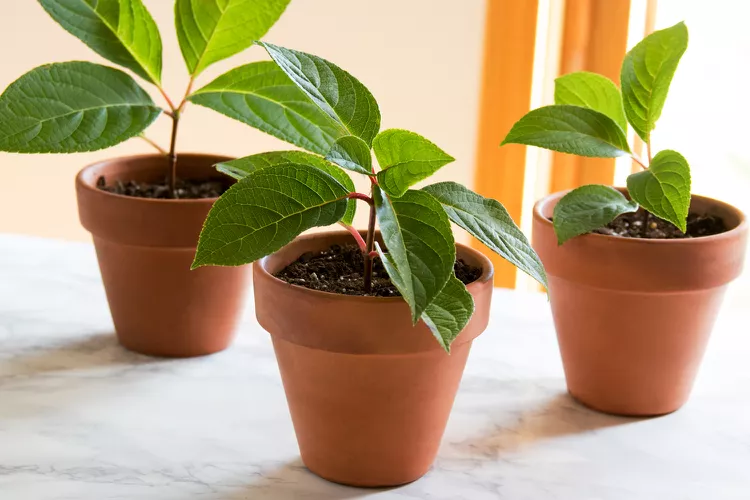
Immediately pot up your cutting in moist potting mix, sand, perlite, or vermiculite. Keep your cutting humid by loosely wrapping it in clear plastic. You can also create a makeshift greenhouse by placing the entire pot in a clear plastic bag. Place your planted cutting in bright light but avoid direct sunlight which can be too powerful. A north or east-facing window make great locations for growing cuttings. Some plants root more quickly than others, so be patient. On average, it takes a month or two for your cuttings to root and become established enough that you can plant them.

Rooting in Water

Some plants with soft stems root so easily that you can simply start them in a glass or jar of water. You can try this with many types of succulents, as well as popular bedding plants like lucky bamboo, coleus, geranium, begonia, and impatiens. Simply snip a 3- to 6-inch length of stem. Remove leaves on the lower half, and place the stem in water. Change the water every few days so it remains fresh and clear.
Frequently Asked Questions

  • Can you grow a cutting from any plant?

    Nearly every plant can be successfully propagated using cuttings, though the exact method will differ from species to species. Some plants are most successfully grown from leaf cuttings, while others do best when grown from roots or hardwood. Before attempting to grow a cutting, make sure to research which method will be most successful for your chosen plant.

  • Can you propagate a plant with a leaf?

    A wide assortment of plants can be propagated by using just a leaf. These include a variety of succulents, as well as other popular houseplants like string of turtles, rex begonia, and more.

  • How long does it take to propagate a plant?

    It can take anywhere from three to six weeks (or longer!) to notice any substantial root growth from a propagated plant. Generally, plants are considered successfully propagated and ready to pot up when their roots are at least 1 to 2 inches long.

Related Article

How to Propagate Pothos Successfully in Soil or Water
40.9K
408
61

How to Propagate Pothos Successfully in Soil or Water

Learn how to propagate pothos plants successfully with these simple step-by-step instructions.
24 Easy-Care Houseplants With Low Watering Needs
16.7K
334
93

24 Easy-Care Houseplants With Low Watering Needs

The low-maintenance, easy-care houseplants in this collection add lushness and color to any home without needing much more than occasional watering.
How to Plant and Grow Philodendron
38.6K
772
270

How to Plant and Grow Philodendron

Find growing information on philodendron, the perfect houseplant for new plant owners.
How to Get Rid of Spider Mites on Indoor Plants
46.1K
4.1K
1.9K

How to Get Rid of Spider Mites on Indoor Plants

Spider mites are a common houseplant pest. Learn the early signs of spiders mites on your plants and how to get rid of them.
16 Small Backyard Garden Ideas for Maximizing Your Landscape
36.4K
3.3K
820

16 Small Backyard Garden Ideas for Maximizing Your Landscape

Even the tiniest landscapes can be magical outdoor spaces with these small backyard garden ideas that maximize your yard.
Here's How to Dry and Preserve Flowers to Enjoy Their Beauty Year-Round
37.9K
3K
1.2K

Here's How to Dry and Preserve Flowers to Enjoy Their Beauty Year-Round

Learn how to dry flowers with air drying, silica gel, or even the microwave. These three methods to preserve flowers are great for wreaths, bouquets, and decorating projects.
How to Clean a Hummingbird Feeder in 5 Easy Steps
9.2K
184
51

How to Clean a Hummingbird Feeder in 5 Easy Steps

Keep your garden a safe and welcoming space for hummingbirds by following our five-step guide for how to clean hummingbird feeders.
How to Plant and Grow Angelonia
7K
140
26

How to Plant and Grow Angelonia

Angelonia (or summer snapdragon) is a spectacular addition for continuous color in any garden.
How to Plant and Grow Agapanthus
18.4K
1.8K
330

How to Plant and Grow Agapanthus

Agapanthus is a low-maintenance perennial and landscape staple that produces clusters of trumpet-shaped flowers.
How to Plant and Grow Shrub Roses
40.7K
3.7K
696

How to Plant and Grow Shrub Roses

Learn to grow shrub roses, which combine all of the best characteristics of roses into a beautiful, low-maintenance plant.
11 Best Deer-Resistant Shrubs for Avoiding Browsing Damage
38.2K
1.5K
504

11 Best Deer-Resistant Shrubs for Avoiding Browsing Damage

No plant is completely safe, but these deer resistant shrubs tend to be low on the menu for hoofed garden visitors.
What's Causing Your Gardenia's Yellow Leaves? We Have Answers
16.5K
1.5K
251

What's Causing Your Gardenia's Yellow Leaves? We Have Answers

What causes your gardenia's yellow leaves? Here's the reason and how to fix it. Gardenias are high-maintenance, but this is how to make them happy.
How to Plant and Grow Jasmine
42.3K
3.8K
418

How to Plant and Grow Jasmine

Jasmine is a perennial shrub or vine beloved for its fragrant flowers. Learn how to grow it in your garden or as a houseplant.
Do Deer Eat Tomato Plants? 5 Ways to Protect Your Harvest
42.1K
1.7K
775

Do Deer Eat Tomato Plants? 5 Ways to Protect Your Harvest

Deer do eat tomato plants from time to time. Here's how to recognize deer damage on tomatoes and how to prevent the creatures from ruining your crop.
11 Simple Tips for Growing Carrots in Containers Successfully
31.7K
317
44

11 Simple Tips for Growing Carrots in Containers Successfully

Growing carrots in containers saves space and protects carrot roots from pests. Here's how to plant and grow carrots in pots.
Which Types of Garlic Are Best to Grow in Your Garden?
32.5K
3.2K
1K

Which Types of Garlic Are Best to Grow in Your Garden?

Hardneck or softneck? Here’s what to know about different types of garlic and how to grow them.
How to Plant a Mango Seed and Successfully Grow It in 5 Steps
40.3K
805
152

How to Plant a Mango Seed and Successfully Grow It in 5 Steps

Learn how to plant a mango seed and grow it with only a few basic supplies and a little time. Use this guide to grow a mango seed successfully.
What Is a Fairy Ring? And Will It Harm Your Lawn?
23.4K
2.3K
1.1K

What Is a Fairy Ring? And Will It Harm Your Lawn?

Find out what causes those mysterious circles of mushrooms on your lawn and how to prevent fairy rings.
How to Grow Plants from Cuttings to Fill More Pots for Free
32.7K
981
245

How to Grow Plants from Cuttings to Fill More Pots for Free

Use this simple propagation technique to grow new plants with stem cuttings.
Easy Lawn Repair for Patchy Grass Using Seed or Sod
10.2K
812
292

Easy Lawn Repair for Patchy Grass Using Seed or Sod

With a bit of grass seed or sod, lawn repair is easy, and you’ll soon have a lush green carpet again.