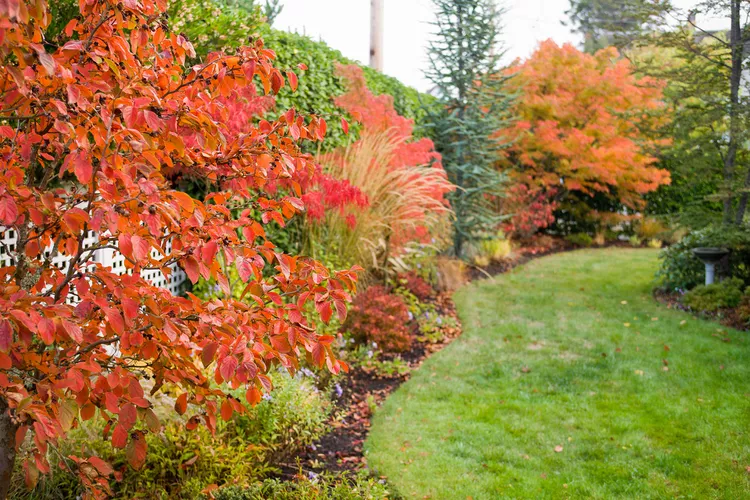
Intentional fall lawn care is key for producing a landscape with lush, vibrant green grass come spring. Homeowners with trees are accustomed to raking leaves during the season, but cool autumn conditions are also great for fertilizing, controlling weeds, and other yard maintenance steps. For a dense expanse of grass next year, consider a few fall lawn care tips that will set your yard up for success in spring.
Adjust Your Mowing Height
If you raised the height of your lawn mower in summer to reduce heat stress to your grass, return the mower deck to its normal height in fall. Cutting your lawn slightly shorter in autumn helps prevent the grass from matting under leaves and snow. However, avoid cutting the grass too short. Tightly clipped turf has fewer roots and allows weeds to get a foothold.
A mower deck height of about 3 inches is best for most grasses during fall.
Give Your Grass Plenty of Water
If a summer drought persists into autumn, water your turf deeply a few times before frost sets in. Adding a couple of generous soaks to your fall lawn care agenda will help your landscape transition to winter before the soil freezes. Nature will sometimes provide moisture for you via rain, but if you have to water your lawn, do so in the morning when the winds are lighter. This will limit evaporation and allow your soil to retain most of the moisture.
Apply Fertilizer
Fall is the best time to fertilize your lawn if you live in the north. Cool-season grasses, such as bluegrass, fescue, and ryegrass, respond well to feeding in early September and late fall (end of October or November). Incorporating fertilization in your fall lawn care routine will help your grass turn vibrant green earlier and look more lush in spring.
Conversely, avoid fertilizing dormant warm-season grasses in the south unless they've been overseeded with winter ryegrass.
Repair Dead Patches
Early fall lawn care should include reseeding dead or thin patches in cool-season lawns. A mulch product embedded with seed and fertilizer is a convenient way to fill sparse patches. Prepare the soil bed with a rake before seeding, and encourage quick germination by watering the new seed regularly for a couple of weeks after application.
If you seed in autumn, you'll have fewer weeds the following year. Fall seeding also ensures the seedlings can establish themselves before stressful hot weather conditions arrive in summer.
Lay Sod
Fall is an excellent time to start a new cool-season lawn or patch existing turf with sod because moderate temperatures and abundant moisture help sod get off to a quick start. High-quality sod will be thick, dense, and weed-free. It's a convenient way to get an instant solution to bare spots.
If conditions turn dry, be prepared to water new sod daily.
Check for Thatch
Thatch is a layer of dead organic matter near the soil surface. A thick thatch layer leads to disease and insect problems, and the lawn ailment can also make your grass vulnerable to damage from drought and cold weather. Thatch may develop when you over-fertilize your lawn or water too frequently. Check for thatch by turning over a small section of turf with a spade. One inch or less of thatch is not a problem, but if there's more than that, your lawn will benefit from removing some.
Remove Excess Thatch
Dethatching involves cutting through the thatch layer and ripping out the debris. Power rakes or vertical mowers are effective tools for this and can be rented from hardware stores and tool libraries. Use a hand rake to remove the thatch from the lawn after it's been pulled out by one of these machines, then compost the debris.
Power raking and vertical mowing can damage grasses spread by surface runners like centipede grass and St. Augustine grass. Use a machine that has correctly spaced knives for these grasses.
Aerate
Aeration is a fall lawn care step that reduces thatch, improves drainage, and loosens soil. Core aerators are the preferred type of lawn aerators—they remove plugs of soil (called cores), breaking up thatch and improving soil structure. The cores are left on top of the turf and slowly break down with rain, mowing, and traffic on the turf.
Aerate cool-season grasses in early fall and warm-season grasses in spring.
Attack Weeds
Creating a healthy, lush lawn is the best way to eradicate weeds without chemical herbicides. Focus on mowing at the proper height, aerating as needed, and adding fertilizer to provide essential nutrients. Smaller weeds are usually shaded out when your lawn is in top shape.
If your yard is plagued with larger weeds, use weeding tools to pull them up from the root. If you must use a weed killer, follow the label instructions carefully and target just the weeds you want to kill rather than treating your entire lawn.
Apply a Topdressing
Topdressing involves applying a thin layer of soil or compost to your existing turf. The process improves growing conditions by reducing thatch, increasing the amount of organic matter in the soil, smoothing bumps in the lawn, and lessening the need for fertilizer. After you dethatch and aerate your lawn, spread a ¼- to ½-inch layer of high-quality soil over the entire yard, especially in problem areas where grass is thinning. Work the topdressing into the soil by raking it in.
Remove Fallen Leaves
Remove fallen leaves by raking or mulching them with a mower before they mat and smother your grass. A mulching mower works well to shred small amounts of leaves and returns the shredded organic matter to the soil, much like topdressing. Stay on top of mulching fallen leaves by running over the lawn with a mulching mower every few days. If there are too many fallen leaves for mowing to be feasible, rake them off the lawn and compost them.
Drain Irrigation Lines
Completely drain your lawn's irrigation system before freezing weather arrives. Empty the system with compressed air or use drain valves. For best results, shut off the water to the system and drain each zone separately. Don't forget to drain the main supply line from the house as well.
If you use an air compressor, don't exceed 50 psi of air pressure.